Hyphens between twenty-one and ninety-nine
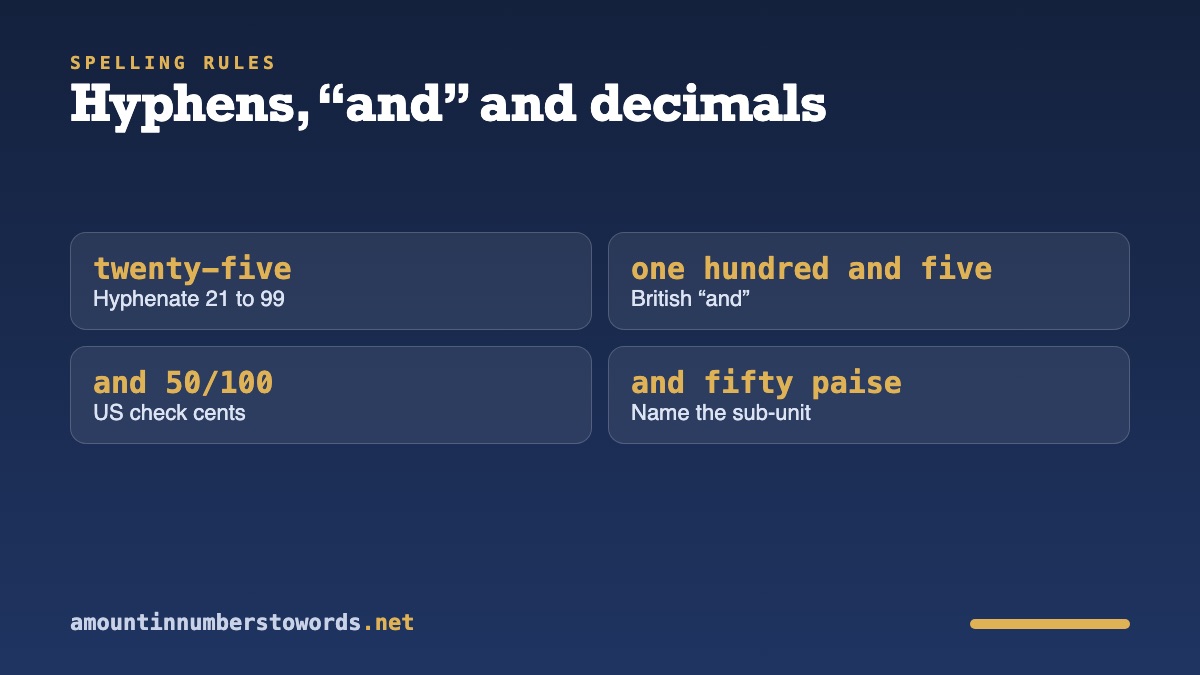
Style guides in both the US and the UK hyphenate compound numbers from 21 to 99: twenty-one, forty-five, ninety-nine. Larger numbers are built from these parts with spaces: three hundred forty-five thousand.
On Indian cheques and invoices the hyphen is often left out (“Twenty Five”), and both forms are accepted. Tick Hyphens in the converter if you need them.
Using “and”
| Style | Example for 1,105.50 |
|---|---|
| American | One thousand one hundred five dollars and fifty cents |
| British | One thousand one hundred and five pounds and fifty pence |
| Indian cheque | Rupees One Thousand One Hundred Five and Fifty Paise Only |
In American usage “and” is kept for the decimal part. British English also places it before the last two digits of each hundred. Pick the style that matches your audience and use it throughout a document.
Decimals
- Money: name the sub-unit — “and fifty cents”, “and seventy-five paise” — or, on US checks, write
50/100. - Other numbers: say “point” and read each digit: 3.75 is “three point seven five”.
- Rounding: currency amounts are rounded to two decimal places before writing them in words.
Capital letters
In running text numbers are written in lowercase. On cheques, invoices and forms, Title Case (“Twenty Five Thousand”) or CAPITALS are both common. Capitals are popular on cheques because they are harder to alter.
Words and figures together
Contracts and formal letters often give both, with the figures in brackets: Rupees Two Lakh Fifty Thousand (₹2,50,000) or Ten Thousand Dollars ($10,000). If the two ever disagree, many legal systems give priority to the words, so check them carefully.
Zero
A zero amount is written “Zero”, and amounts below one unit are written with the sub-unit alone: “Seventy-Five Cents”, “Fifty Paise Only”. In British English “nought” is also used for the digit 0, but “zero” is clearer in financial documents.
Frequently asked questions
Should I write twenty-five or twenty five?
Style guides recommend the hyphen (twenty-five). Indian cheques and invoices commonly omit it. Both are understood.
Is it correct to say “one hundred and fifty”?
Yes in British English, which adds “and” after hundreds. American English usually says “one hundred fifty” and keeps “and” for decimals.
How do I write 0.5 in words?
As a number, “zero point five”. As money, name the sub-unit: “fifty cents” or “fifty paise”.